
The last individual medals of this JWOC 2023 were disputed last Saturday with the long-distance race. Although the runners already had a rough idea of what the terrain would look like after the middle-distance race, this time a rough, challenging, and steep area was added on the southern slope of the map, which was going to demand a lot of precision in the controls in the slope and offer interesting challenges in terms of route choices.
However, comparing both the men’s and women’s courses, we can appreciate how the route choice legs turn out to be more interesting and decisive in the men’s course, while in the women’s course, the course-setters chose to use a greater percentage of the “middle-distance-style” area, and not as much long and decisive route choice legs. Of course, this is a personal choice of the organizers, but in these times where the fight for “gender equality” is so in full swing, it feels at least a little unfortunate. It would have been interesting to see how the girls would have implemented the long legs of the boys’ course. But this is just my opinion!


WOMEN’S CLASS
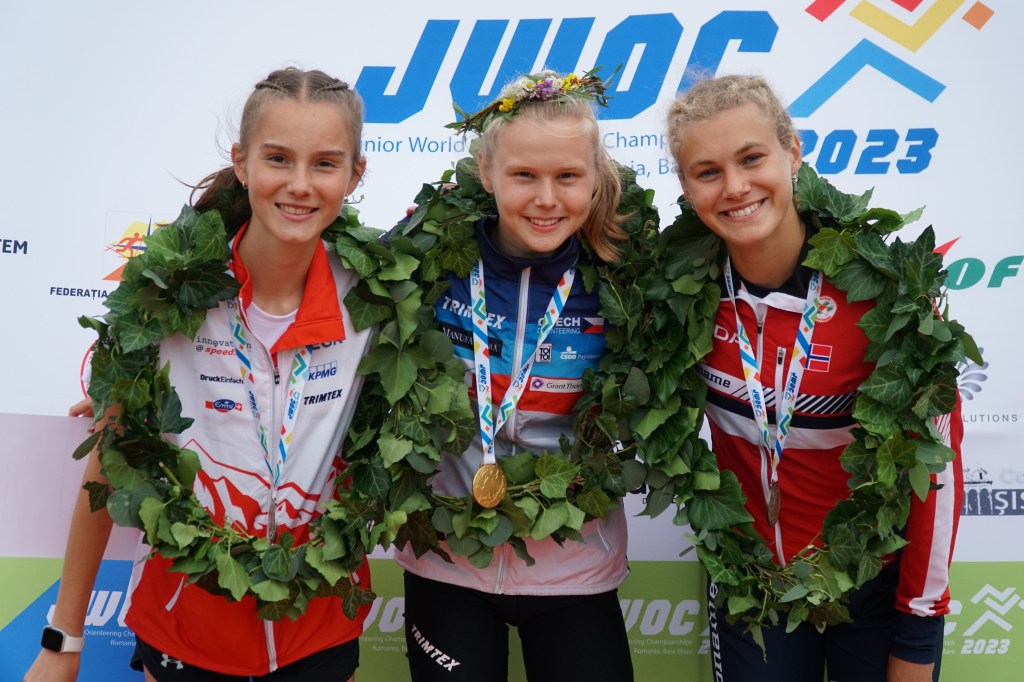
In the women’s class, the victory fell to the side of the Czech runner Lucie Dittrichova, who beat the middle-distance champion, the Swiss Henriette Radzikowski, by just 1 second. Very very tight all the way! The bronze went, once again, to the Norwegian Pia Young Vik, just over 1 minute behind the winner.
Despite the fact that we have said that the women’s route choices were less interesting, we can highlight 4 legs that deserve to be analyzed (especially the last one).
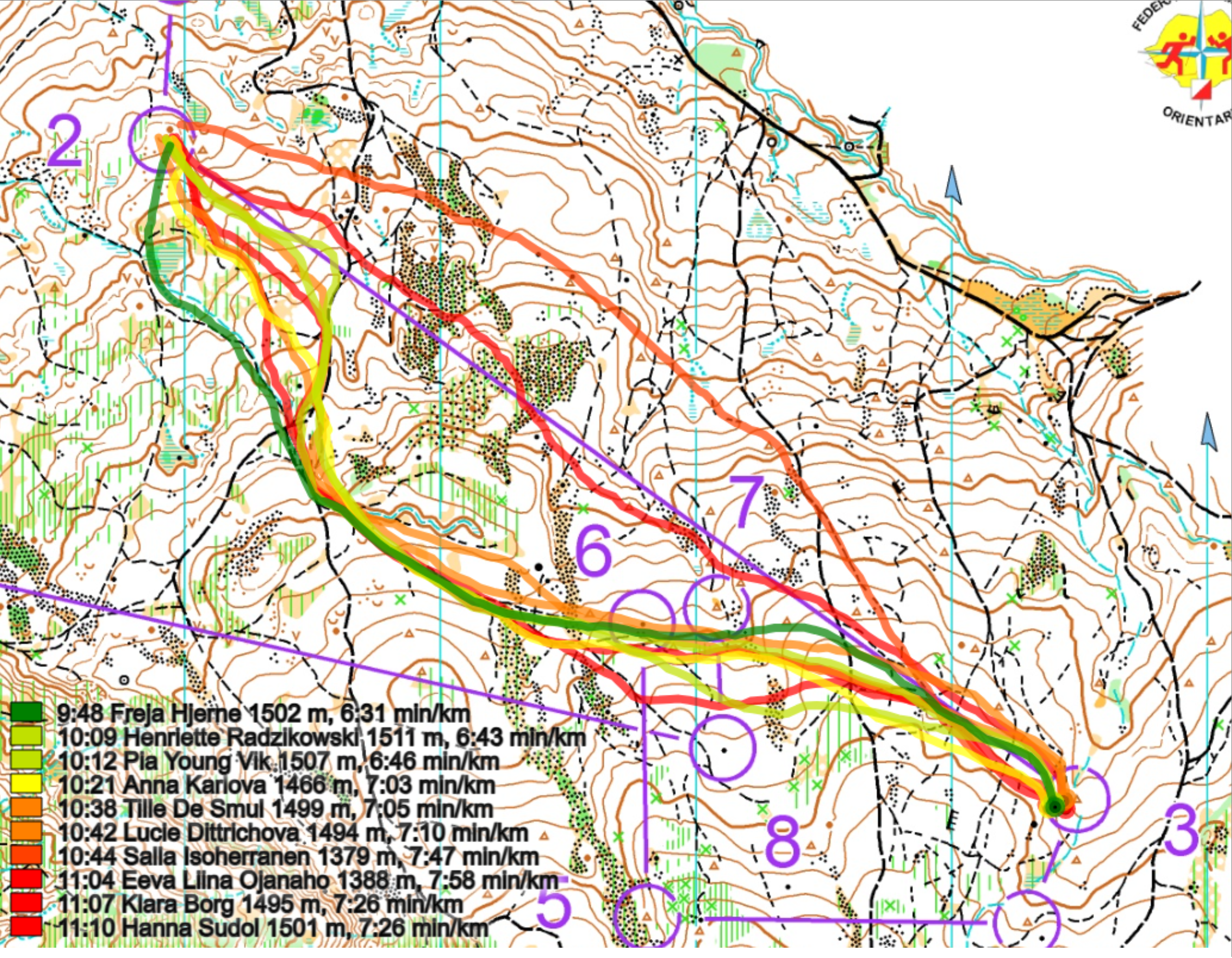
LEG 2-3
Fairly runnable leg where some sections of “rocky beds” extend below the red line, and it seems a good idea to avoid them. Using the southern paths, which practically lead you to the control, is undoubtedly the best option. There don’t seem to be any other effective options for this leg.

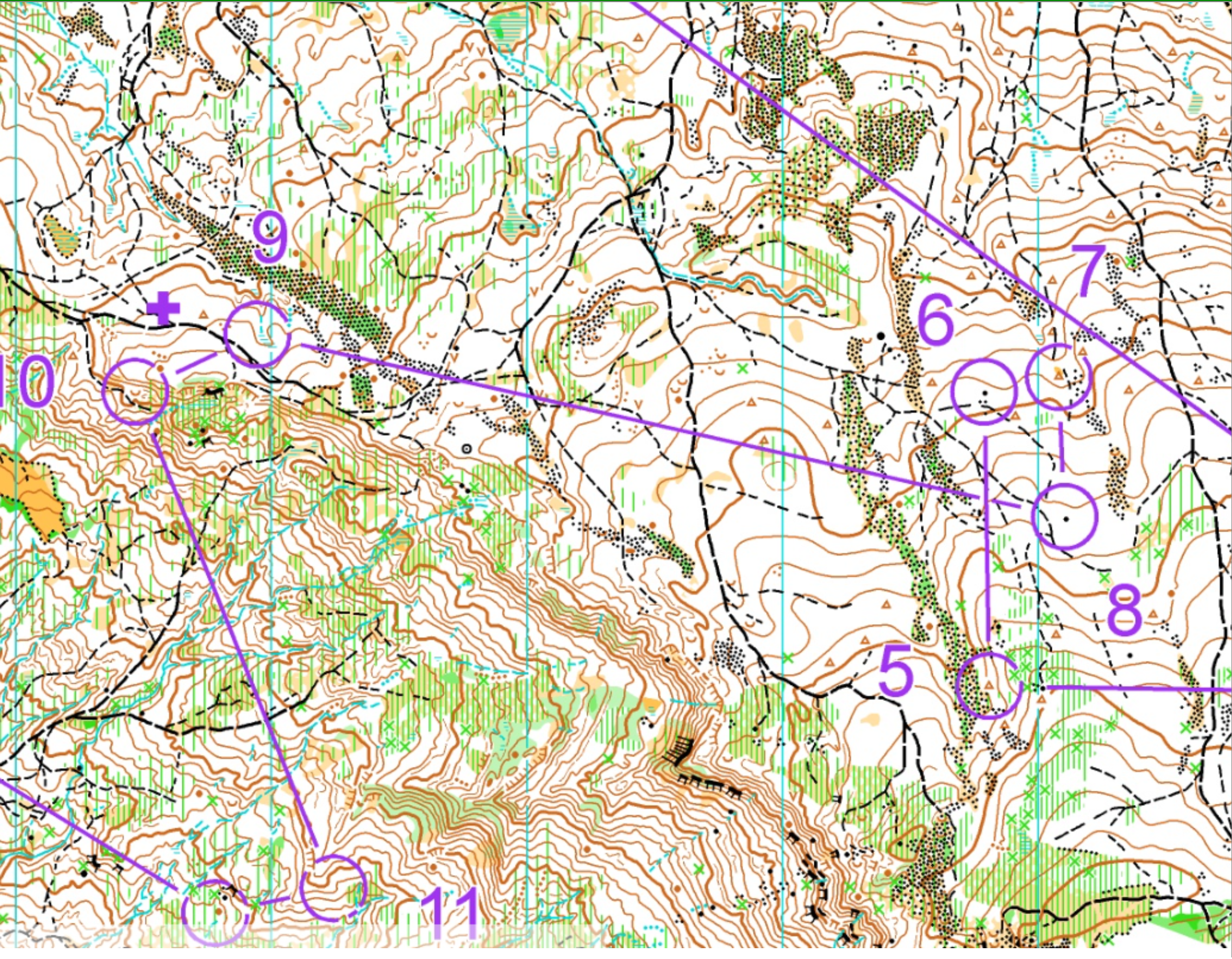
LEG 8-9
Again avoiding the stony areas and using small paths are the best idea. There are not really big differences between the different options if they are implemented correctly.

LEG 10-11
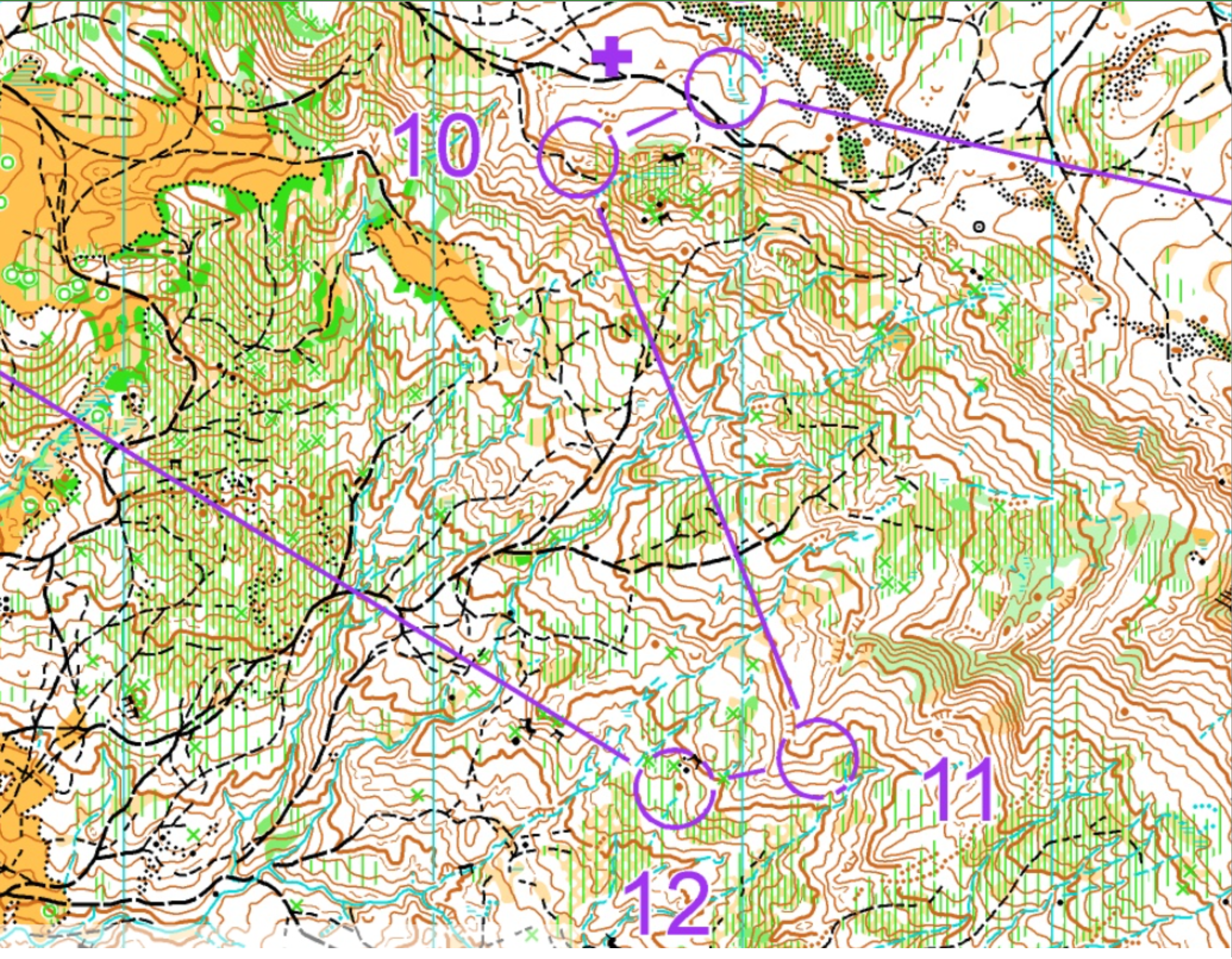
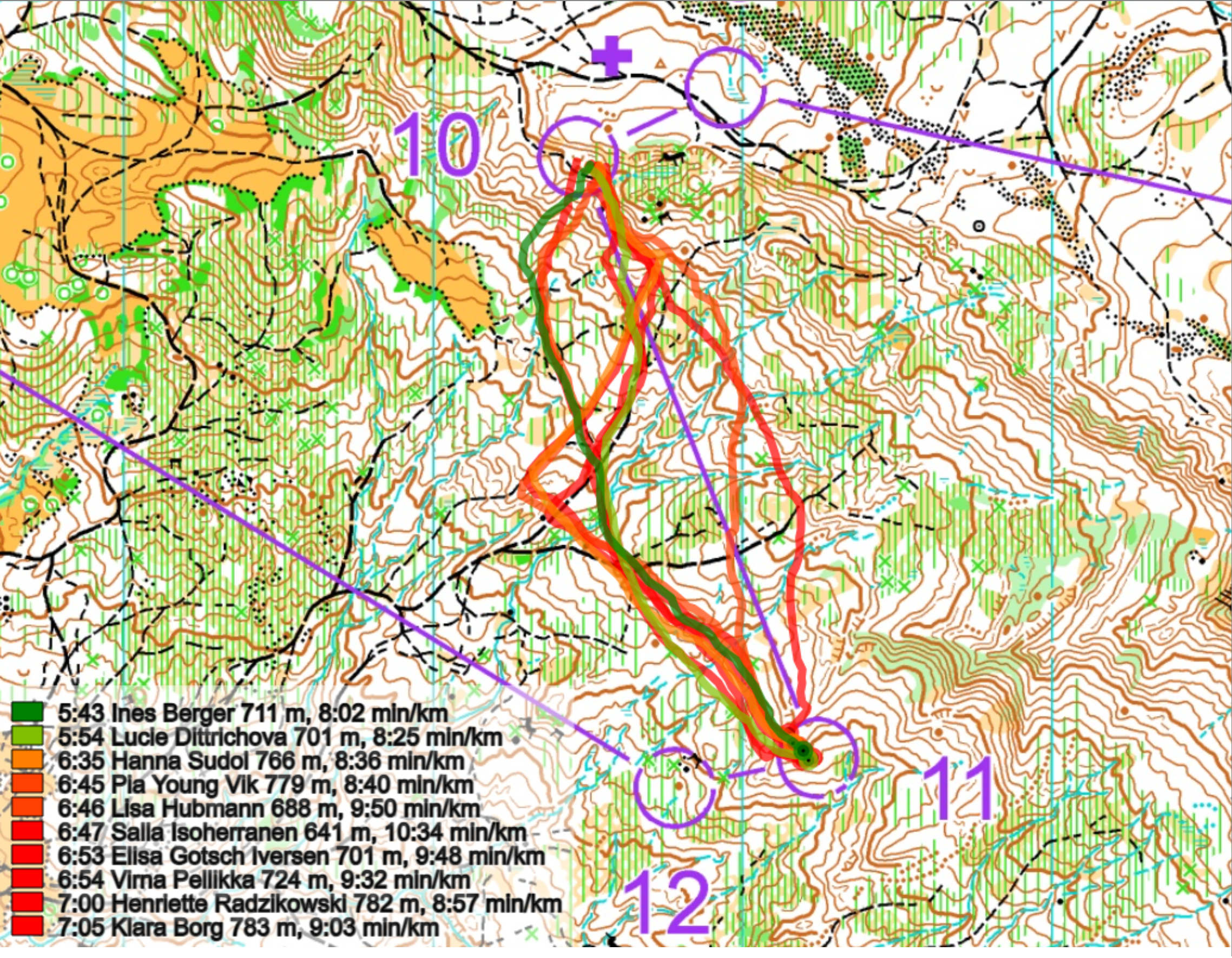
In this leg, we finally go to the south side of the slope, where the terrain is steeper, and the forest is denser and rougher. It is a diagonal downhill leg with an 80-meter difference in level. In this type of leg, it is important to get a clean attack on control to minimize losses. Therefore, it is a good idea to use the small paths to go down safely and look for an entrance to the control “at level” from a safe element. Perfect execution by Inés Berger in this leg. It is a leg where you are not going to win the race, but where you can easily lose it if you are not precise and focused enough!
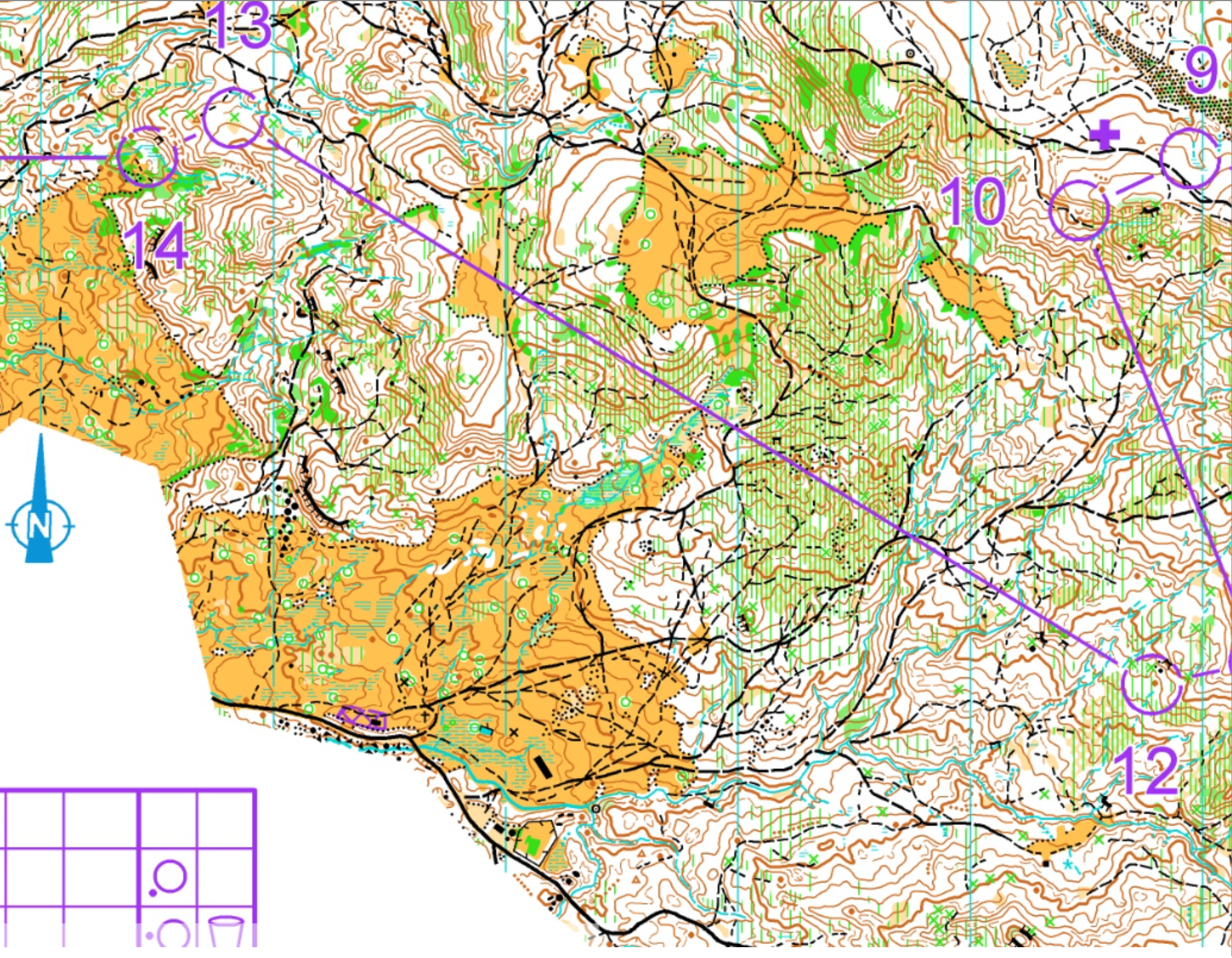
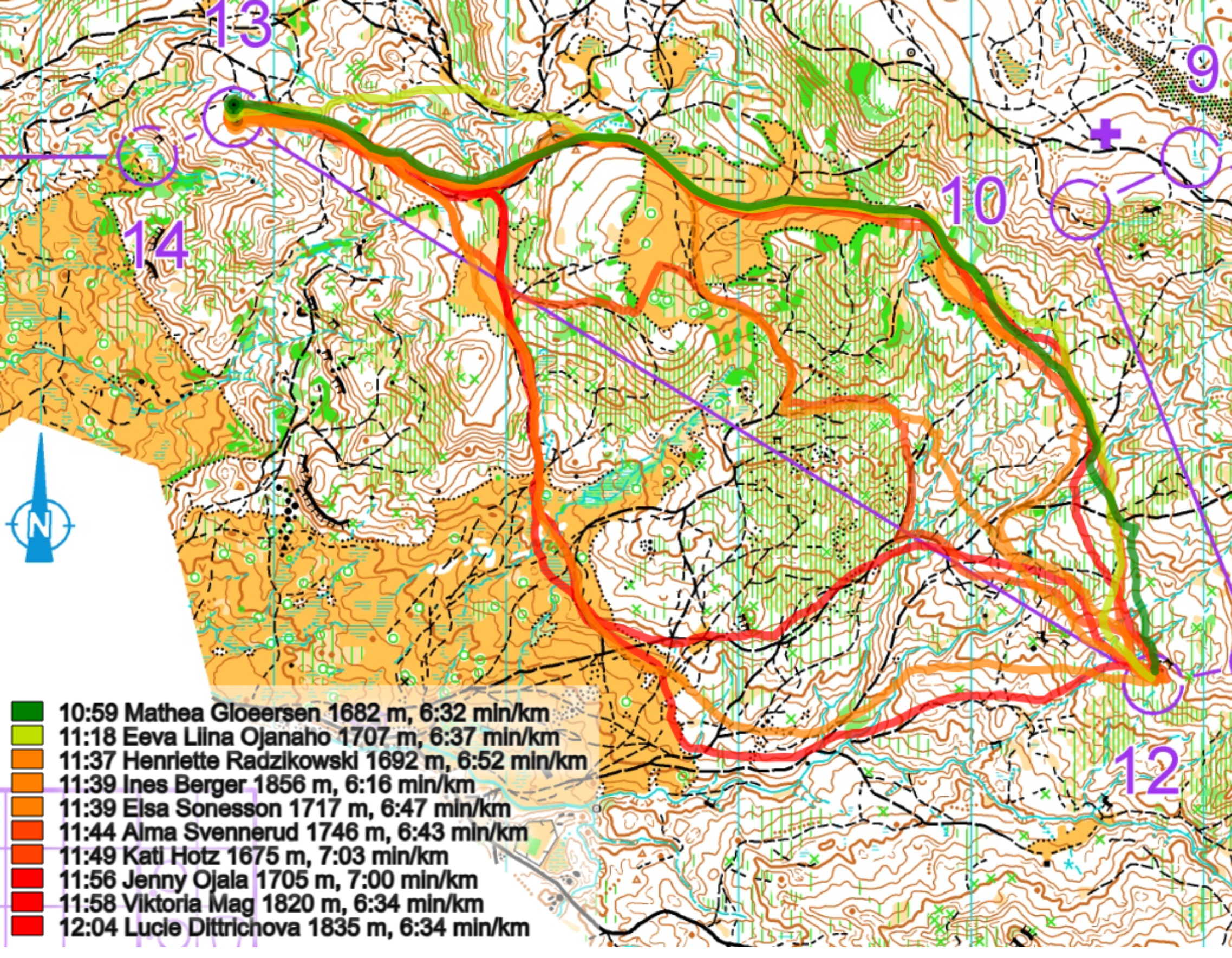
LEG 12-13
This leg is the best in terms of route choice (despite not being maybe perfectly balanced), since we can find multiple options to navigate to the control. To make the choice of route in this type of leg, it is necessary to consider both the climbing and the areas of easy/difficult progression, as well as reading the leg “from end to beginning” to find the best control attack. By doing this, we can see how it is possible to use about 300 meters of path in the last part of the leg, which drives the runner practically to the flag. This is, without a doubt, a great attraction for choosing the route and, therefore, the option on the right gains more weight. Although it’s necessary to climb a few contours in the first third of the leg, then it’s just pushing hard down the trail for the final 2/3. Interesting leg.
7 800 m, 146 starting competitors
| Plac | Name | Organisation | Time | Diff |
|---|---|---|---|---|
| 1 | Lucie Dittrichova | CZE Czechia | 57:28 | |
| 2 | Henriette Radzikowski | SUI Switzerland | 57:29 | +0:01 |
| 3 | Pia Young Vik | NOR Norway | 58:33 | +1:05 |
| 4 | Mathea Gloeersen | NOR Norway | 58:44 | +1:16 |
| 5 | Eeva Liina Ojanaho | FIN Finland | 59:22 | +1:54 |
| 6 | Hanna Sudol | POL Poland | 1:01:11 | +3:43 |
| 7 | Salla Isoherranen | FIN Finland | 1:01:25 | +3:57 |
| 8 | Anna Karlova | CZE Czechia | 1:01:42 | +4:14 |
| 9 | Freja Hjerne | SWE Sweden | 1:01:43 | +4:15 |
| 10 | Virna Pellikka | FIN Finland | 1:01:50 | +4:22 |
MEN’S CLASS
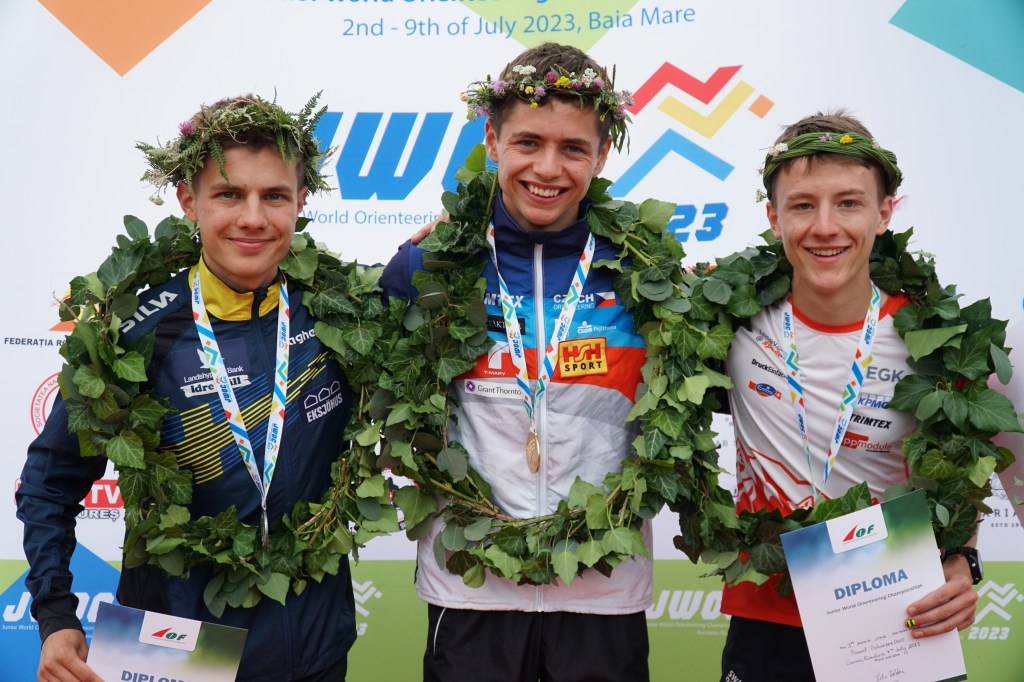
In the men’s class, the victory went to an impressive Jakub Chaloupsky, who with a perfect run prevailed by more than three minutes. The Czech was unstoppable! The silver medal went to the Swede Noel Braun, followed by the Swiss Pascal Schaerer in third place.
Let’s look into the 4 most interesting legs of the men’s course.
(Unfortunately, 2dRerun is temporarily not working for the men’s course, so I drew the route choices and will update the article later. Sorry for the inconvenience)
LEG 2-3
Similar leg to the women’s course and, therefore, the same reasoning. Avoiding “rocky beds” and taking advantage of the paths is the best tactic.


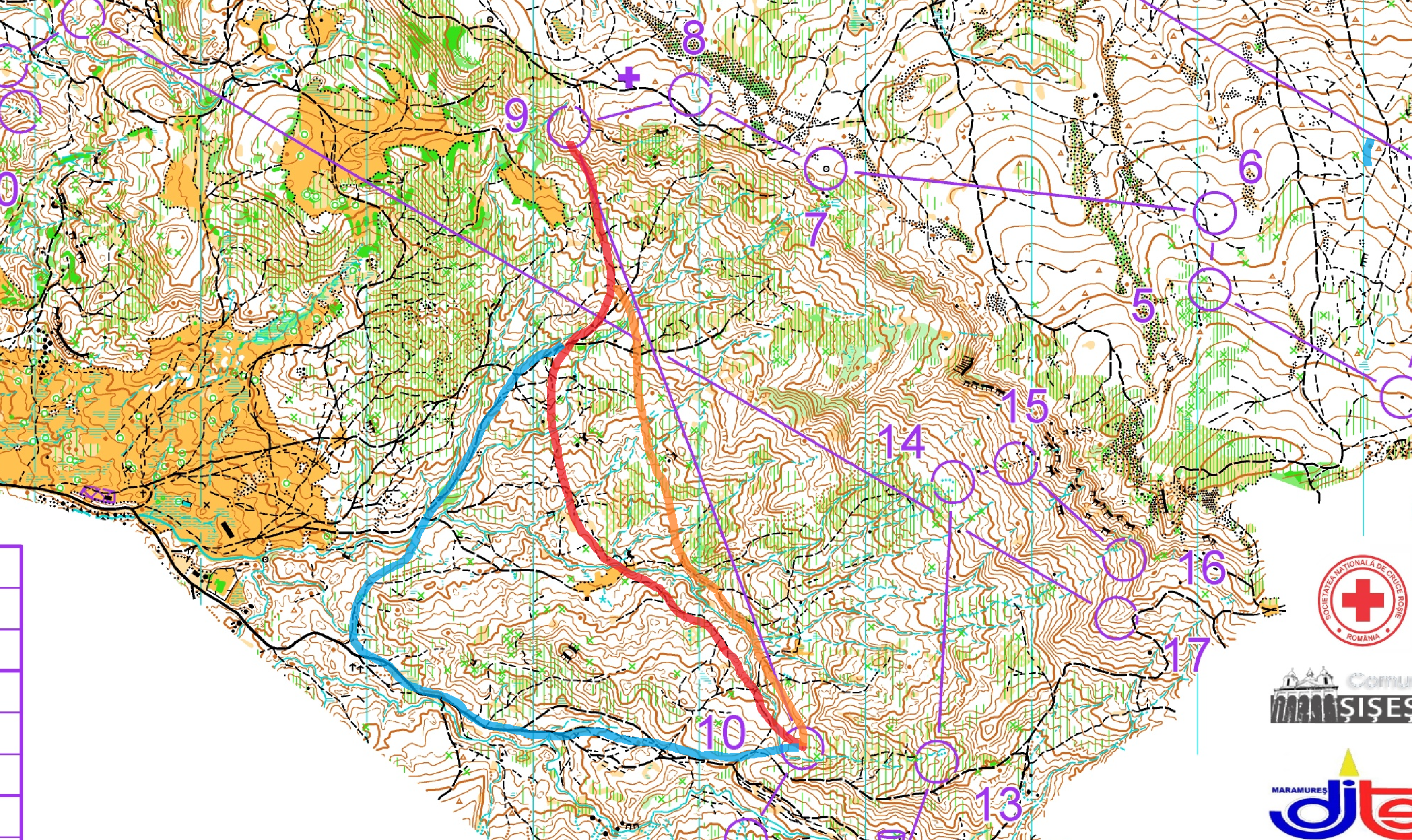
LEG 9-10
Already on the south side of the slope, came the first long leg in diagonal descent, along the steep slope. The most chosen route, and also the fastest, uses almost entirely small paths that lead to the control. There is the option of saving a few meters by running straighter, but the speed in the forest is clearly reduced. Some runners (including Benjamin Wey) go more around but lose quite a bit of time. Of course, it is possible to run other types of elections, but they are clearly worse.

LEG 13-14
This leg is quite interesting because, despite not being a long leg, it does offer at least 3 options that can be quite decisive. It is a leg in which you ascend 25 meters diagonally through a very steep slope. Three options open: 1) Run the longest route using the path at the beginning to get the level, 2) Go up the trough the reentrant at the beginning and progress up the slope, 3) Run a bit to the left to search for the area more “flat” and “runnable” to go up at the end. This last option (3) turned out to be the most effective and was masterfully executed by the New Zealander Zefa Faavae who won the split.
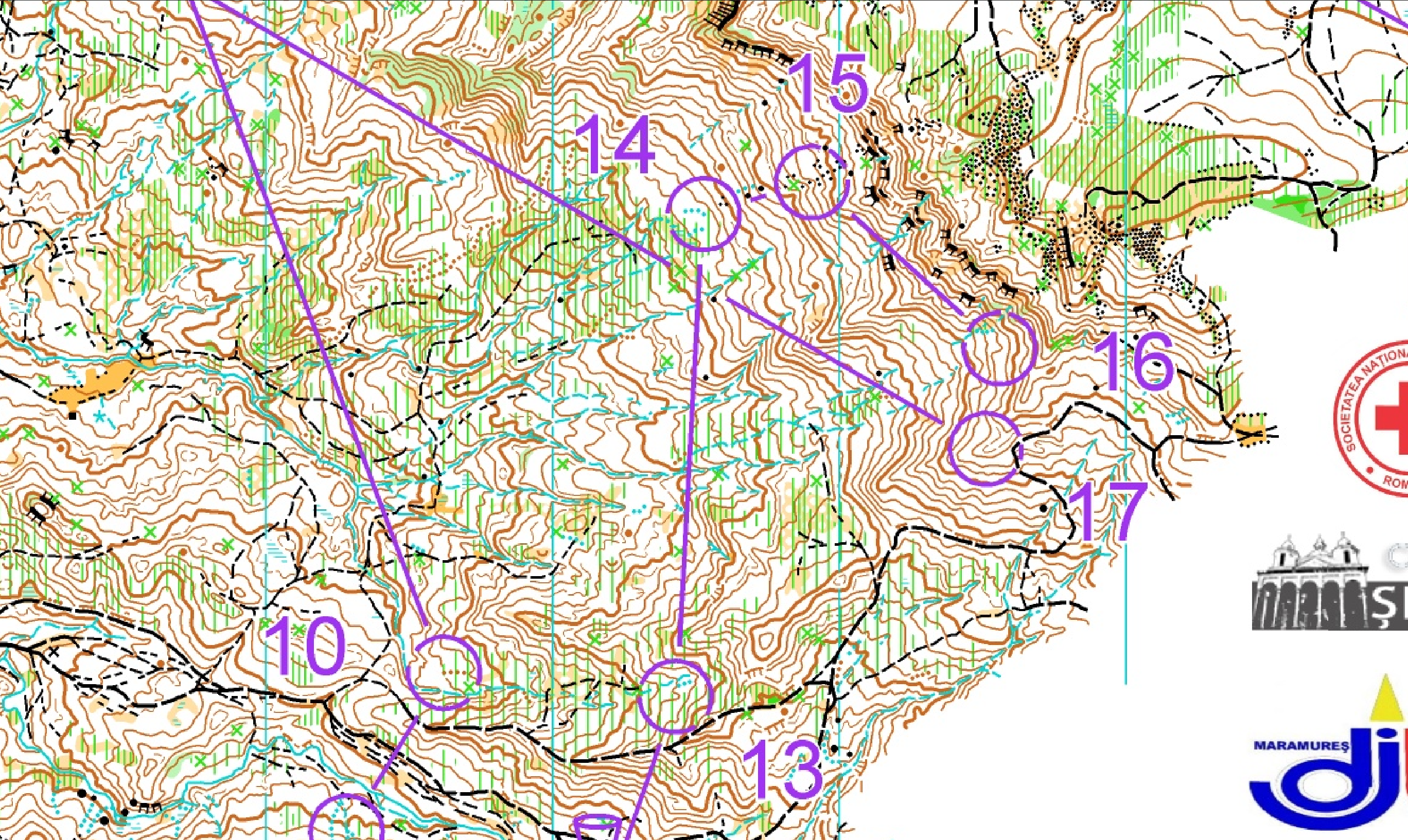

LEG 17-18
And finally, we come to the best leg of the day in terms of route choice. It is a very long leg with very different options in which, once the plan has been chosen, it is really important to push as much as possible on the path sections to scratch as much time as possible thanks to speed. Faced with a leg of this type, it is evident that trying to execute it directly, through the dense and steep slope, is not the best idea since it would be really slow. Therefore, it is necessary to analyze it with a wider vision. In this way, two alternatives appear (with many other “sub route choices”) that consist of 1) going up north to use the network of paths that lead to the control area 7-8; and 2) going down towards the West also using the network of roads to the meadow and, from there, go up to the control. Both options are interesting, although the northern option (1) was the fastest. In any case, as we mentioned earlier, it is very important to push hard and offensively in any of the options chosen, since speed is decisive for success in the leg.
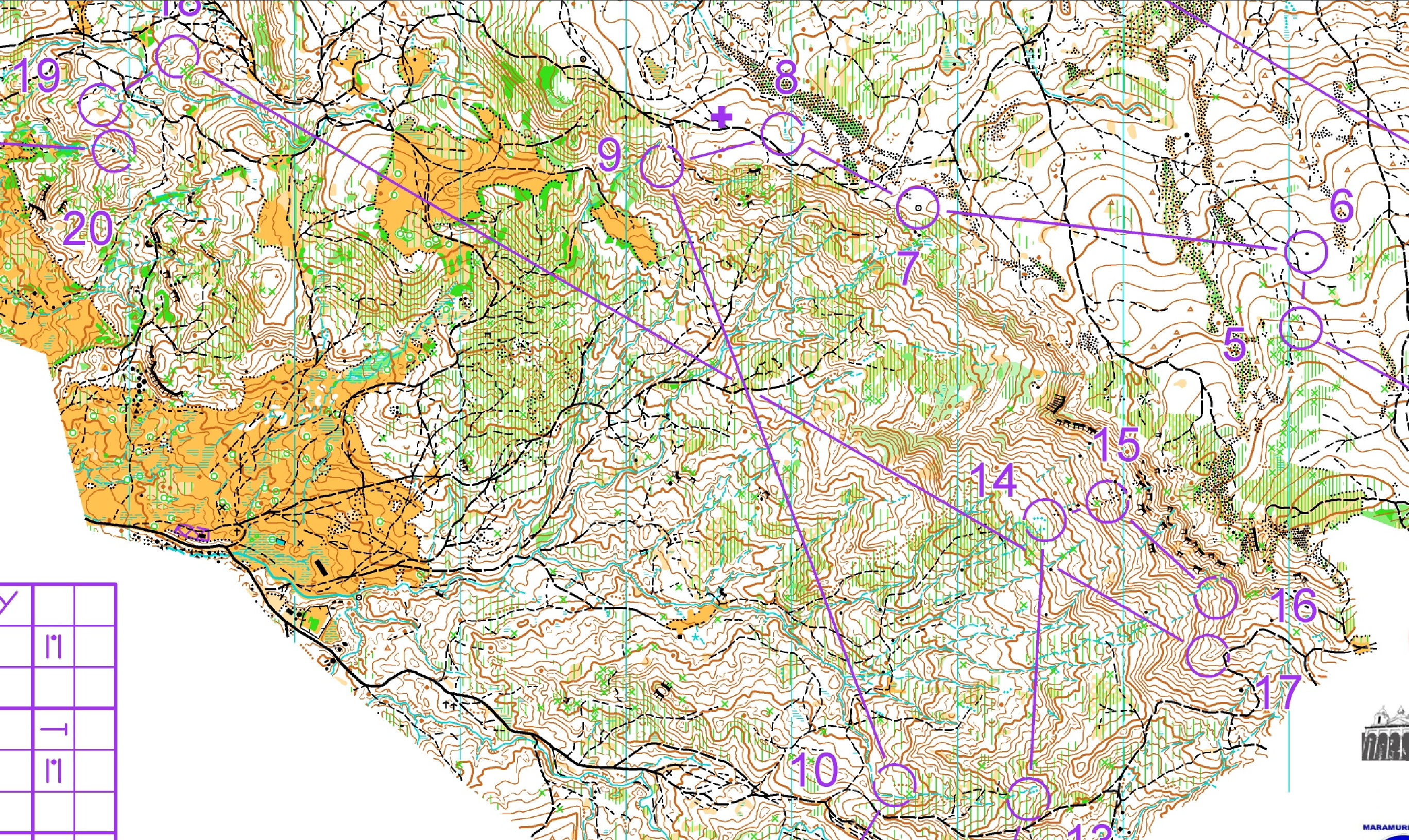

10 700 m, 169 starting competitors
| Plac | Name | Organisation | Time | Diff |
|---|---|---|---|---|
| 1 | Jakub Chaloupsky | CZE Czechia | 1:11:20 | |
| 2 | Noel Braun | SWE Sweden | 1:14:28 | +3:08 |
| 3 | Pascal Schaerer | SUI Switzerland | 1:15:12 | +3:52 |
| 4 | Matthieu Buehrer | SUI Switzerland | 1:15:50 | +4:30 |
| 5 | Zefa Faavae | NZL New Zealand | 1:15:54 | +4:34 |
| 6 | Stanislaw Pachnik | POL Poland | 1:18:42 | +7:22 |
| 7 | Joschi Schmid | SUI Switzerland | 1:19:14 | +7:54 |
| 8 | Antoine Derlot | FRA France | 1:19:17 | +7:57 |
| 9 | Benjamin Wey | SUI Switzerland | 1:19:31 | +8:11 |
| 10 | Aarni Ronkainen | FIN Finland | 1:19:57 | +8:37 |
Did you like the content? You can buy me a cup of coffee 😉
Discover more from RF-COACH
Subscribe to get the latest posts sent to your email.
 RF-COACH
I couldn’t agree more regarding the gender equality. The women’s courses are commonly under planned or miss out long route choices. And this is even worse in the veteran classes (look at the winning times for WMOC last year).
Women want their courses to have a similar winning time and similar technical challenges.
LikeLiked by 1 person