Four Days. Four Terrains. One Identity.
Some events fill a weekend. And some events build something much bigger. The Maximus O Meeting 2026 was not just four races in four days. It was a statement of intent. A confirmation that when vision, passion, and professional standards meet, something special happens in the forest. This is the story of four stages. But above all, it is the story of a project.
Stage 1 – Setting the Standard
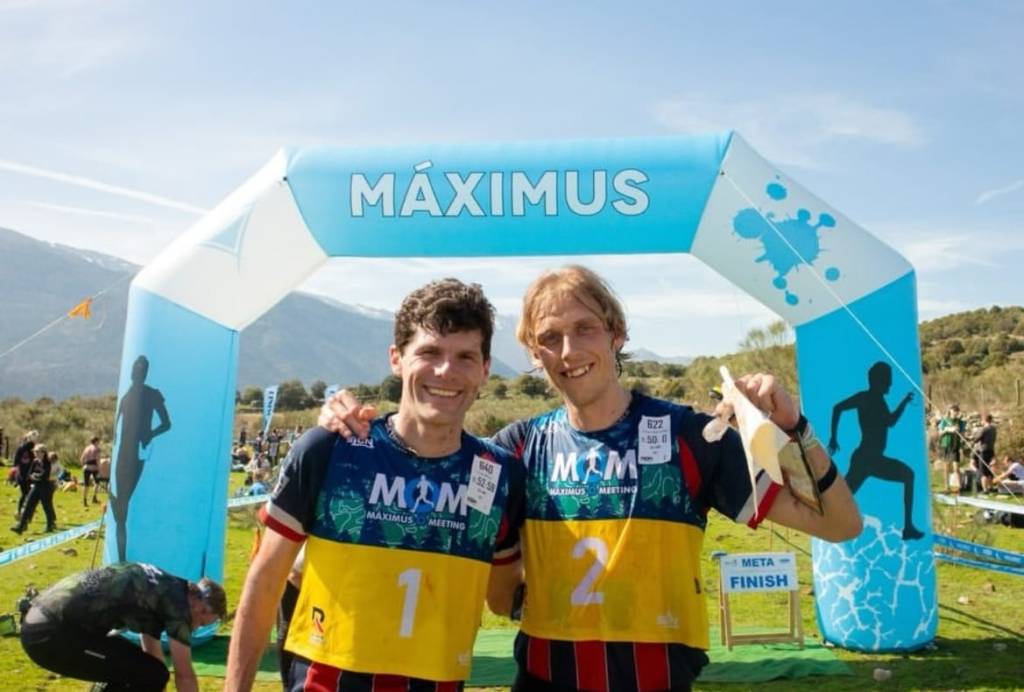
Stage 1 delivered everything you could ask for in an opening day, and probably a bit more. Spectacular terrain, fast but demanding in equal parts, combined with perfect racing conditions under a powerful sun and temperatures around 20 degrees. From the very first start, there was a sense that something special was about to unfold.
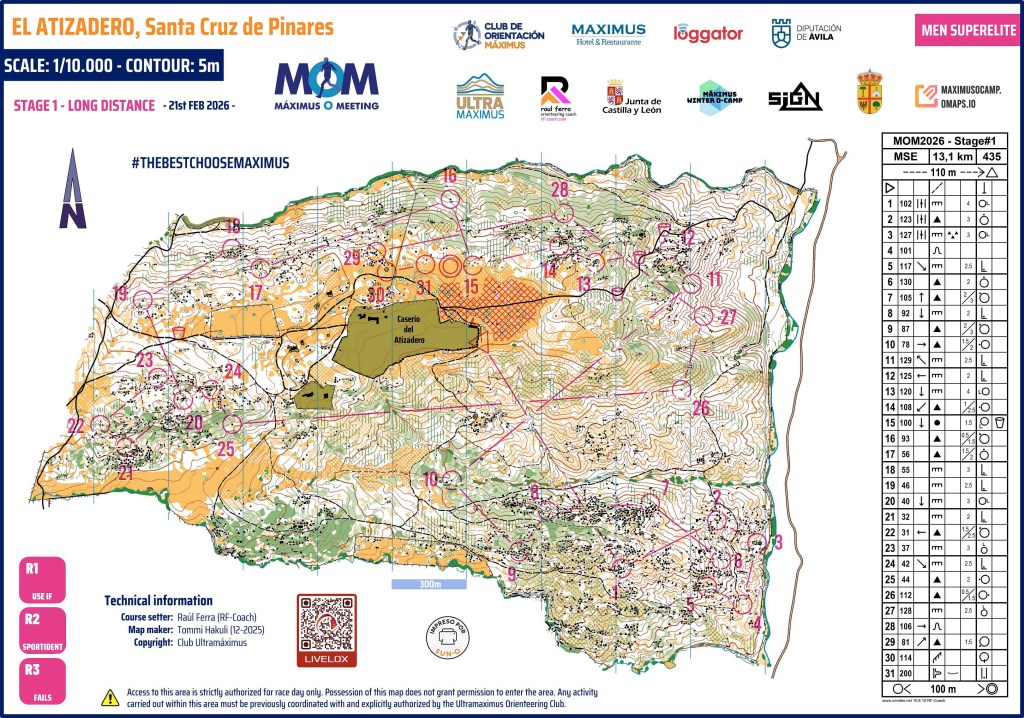
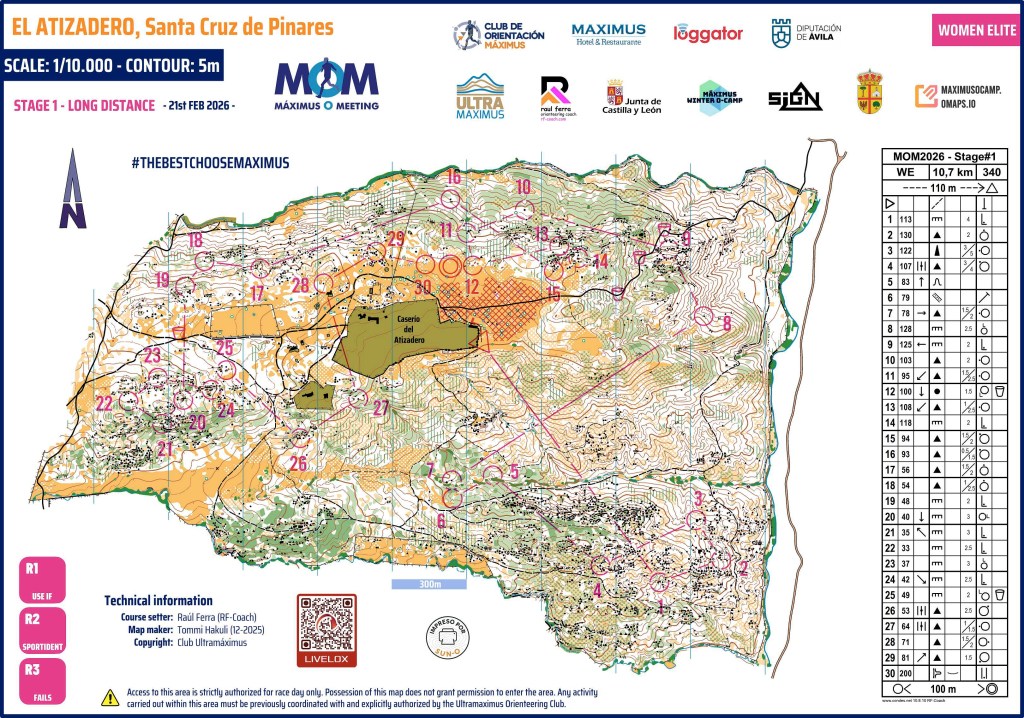
We had the privilege of working on a true gem of a map, crafted by Tommi Hakuli. A terrain defined by its variety, where runners were constantly forced to adapt their technique, their rhythm, and their decision-making. No section allowed you to switch off. Every leg required full commitment.
From a course planning perspective, this is exactly the kind of terrain that allows you to challenge athletes in a meaningful way. Long route choices, changes in direction, and subtle technical sections created a balanced but demanding race.
The favorites did not disappoint. Pia Young Vik and Oskar Hägström set the tone from the very beginning, claiming the stage victories and hitting the estimated winning time of 80 minutes with impressive precision.
A strong opening statement. The bar was set high.
Stage 2 – Pure Orienteering in Dehesa de Navaluenga
If Stage 1 left a great impression, Stage 2 elevated the experience to another level.
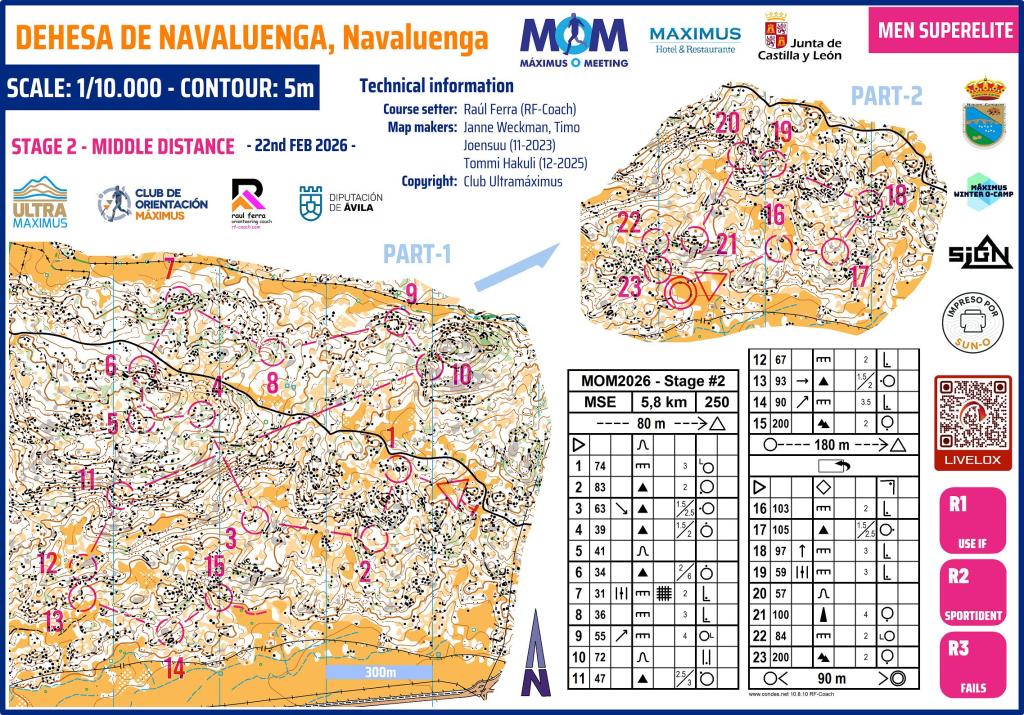
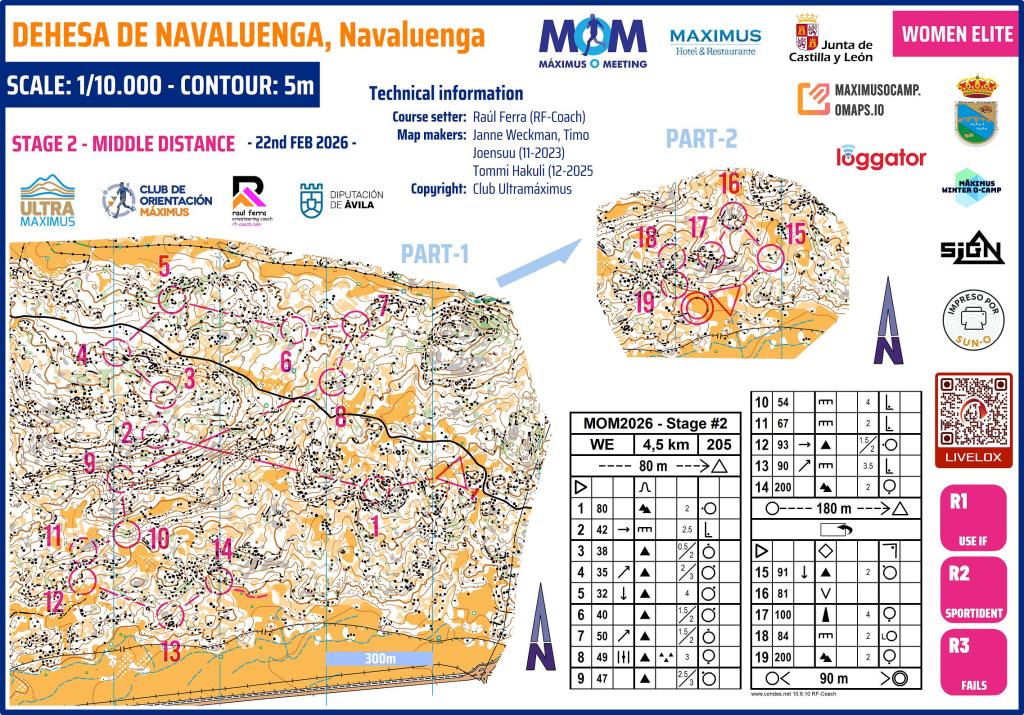
The eastern part of the Dehesa de Navaluenga is widely regarded as one of the finest orienteering terrains in the world, and it showed. This is one of those rare places where it is simply impossible not to enjoy yourself, regardless of your level.
But enjoyment does not mean simplicity.
The terrain is highly demanding from a technical perspective. Constant micro route choices, subtle contour details, and frequent changes in vegetation require continuous map contact. It is terrain that punishes hesitation and rewards clarity.
Under a relentless sun and temperatures approaching 24 degrees, athletes faced a real test of both technical and physical capacity. Everyone enjoyed the experience. But many also paid the price of small mistakes. Seconds became minutes. And minutes changed the classification.
This was orienteering in its purest form.
In the women’s race, Pia Young Vik confirmed her outstanding shape with a second consecutive victory, strengthening her lead in the overall standings. In the men’s category, Julien Vuitton delivered one of the performances of the week. As the only representative of Halden SK, he managed to overcome the powerful squads of OK Linné and Kalevan Rasti, securing an excellent victory.
At this point, the championship was wide open and full of possibilities.
Stage 3 – Sprint Chess in Navatalgordo
The third stage brought a complete change of scenario, and with it, a different kind of challenge.
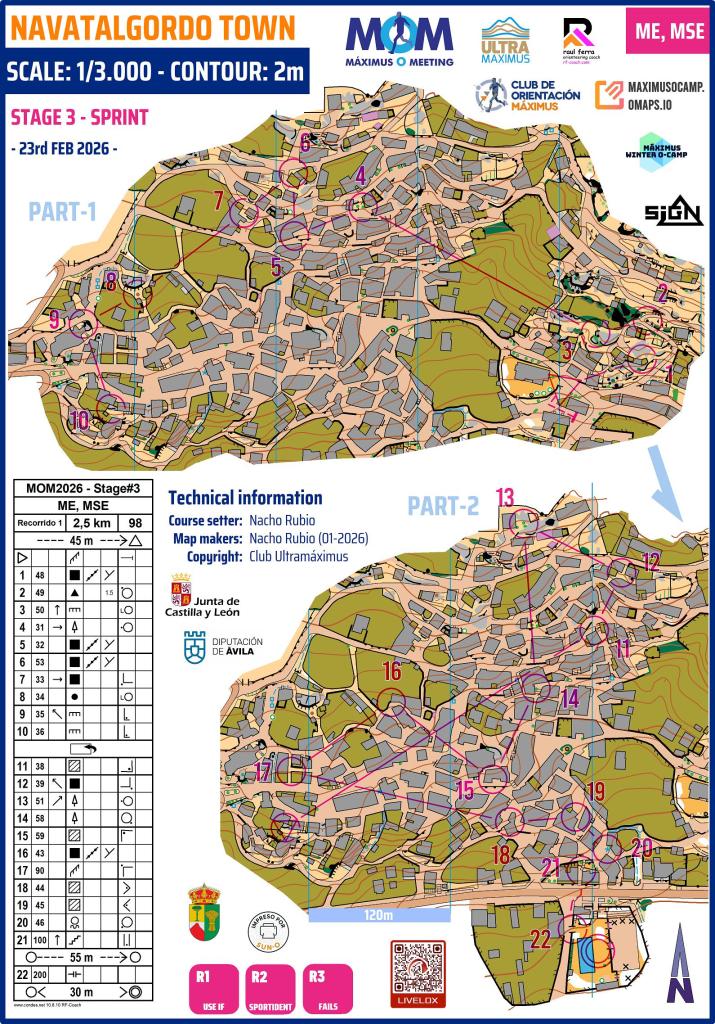
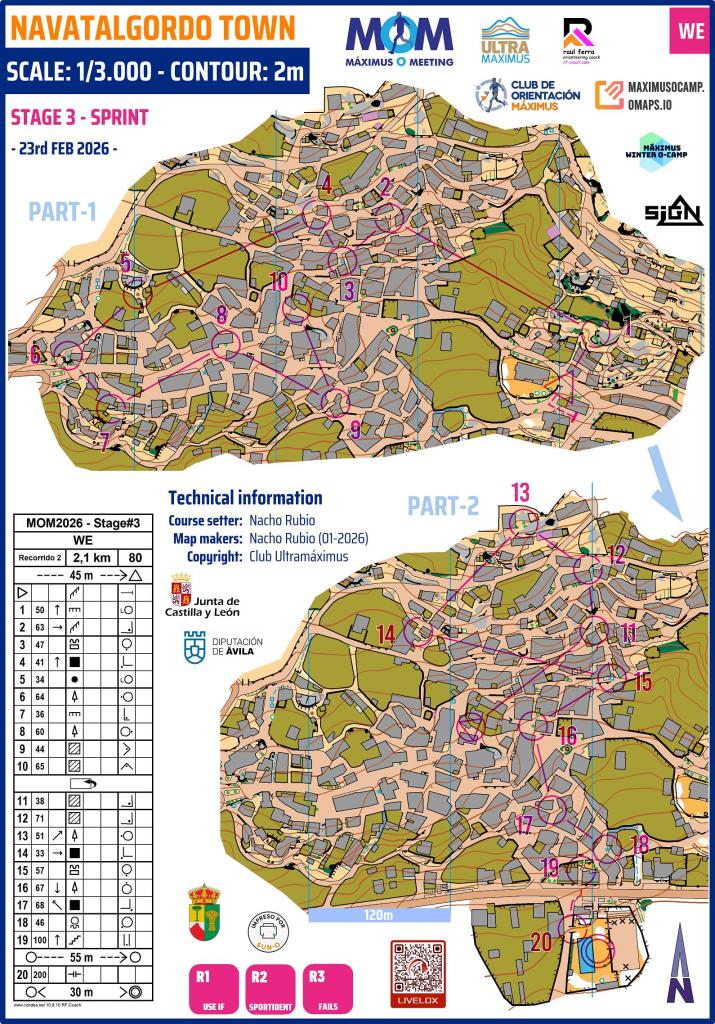
The beautiful and intricate village of Navatalgordo offered the perfect setting for a sprint stage that exceeded all expectations. A true playground for sprint orienteering, capable of convincing even the most traditional athletes who tend to avoid this format.
Its seemingly chaotic architecture became the key element of the race. Narrow passages, unexpected barriers, changes of direction, and constant decision-making transformed the course into a high-speed chess match.
Athletes were running at maximum speed, trying to maintain control while processing complex information in fractions of a second. Finding the balance between speed and precision was not easy, and many paid the price.
Once again, the weather played its part. Another sunny day, again above 24 degrees, adding an extra layer of intensity to an already demanding race.
In the men’s category, Oskar Hägström delivered a very solid performance to take the victory, later admitting at the finish that this had been one of the most enjoyable sprints of his career. In the women’s race, Aleksandra Hornik showed her quality and composure to take the win in a fast and technical environment.
With this, everything was set for the final stage. The chase start would decide it all.
Stage 4 – Drama at El Burguillo
The final stage, with a chase start format, promised excitement. It delivered drama.
Set in the stunning landscape of El Burguillo, the courses combined beauty and difficulty in equal measure. Granite terrain, bare rock surfaces, large boulders, steep cliffs, and runnable open areas created a varied and demanding challenge.
It was a stage where athletes had to be complete. Physical strength alone was not enough. Technical precision alone was not enough. Only those capable of combining both could succeed.
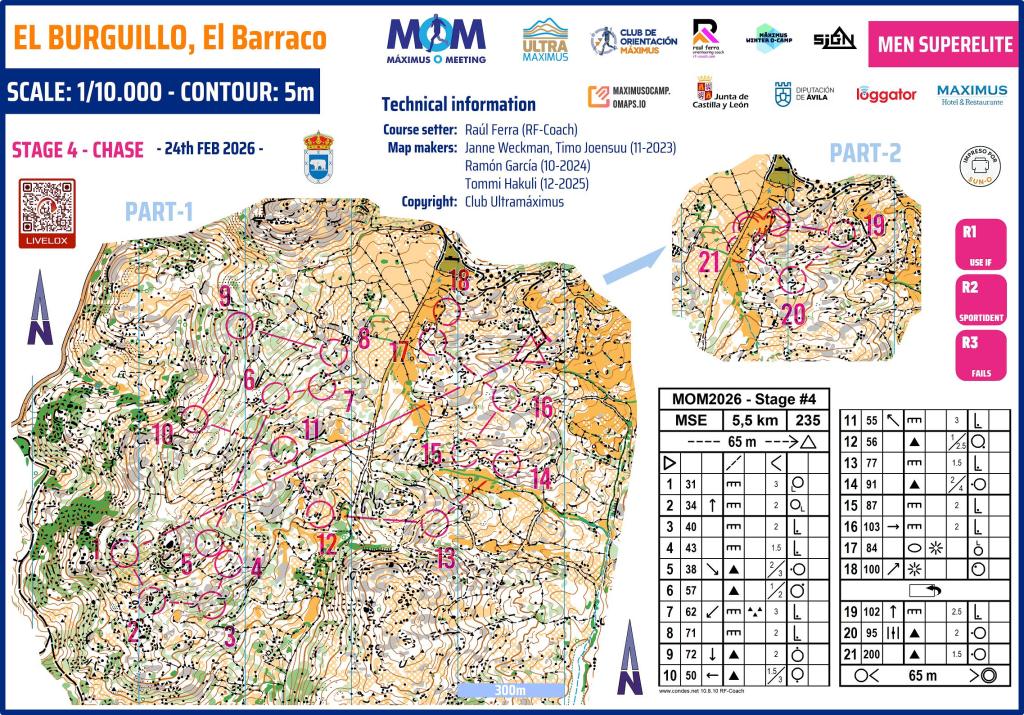
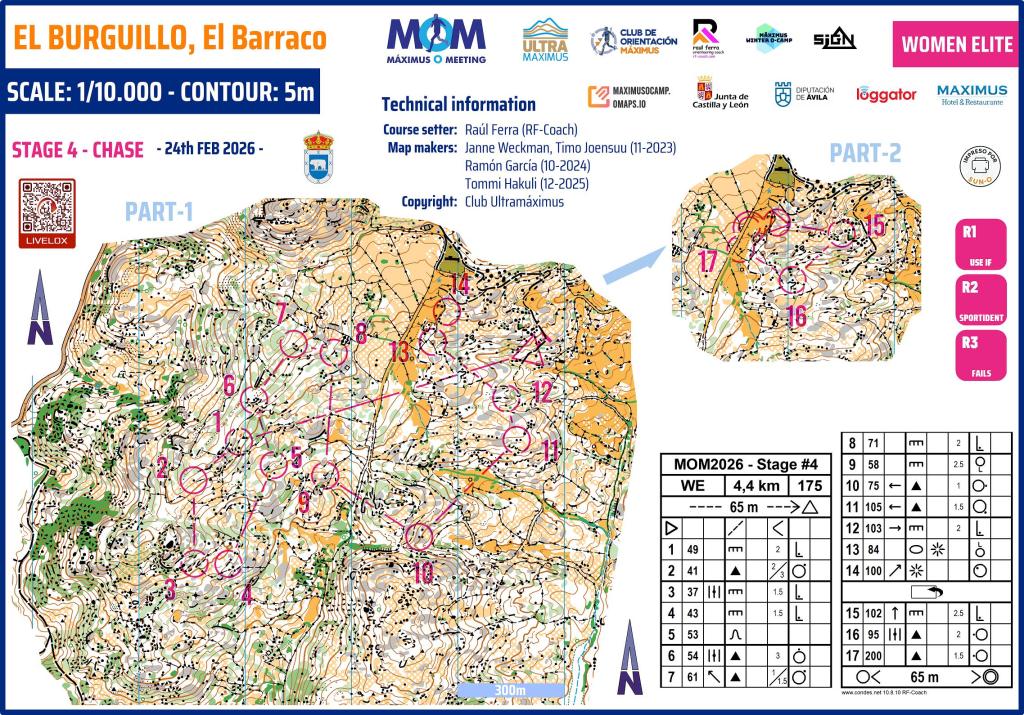
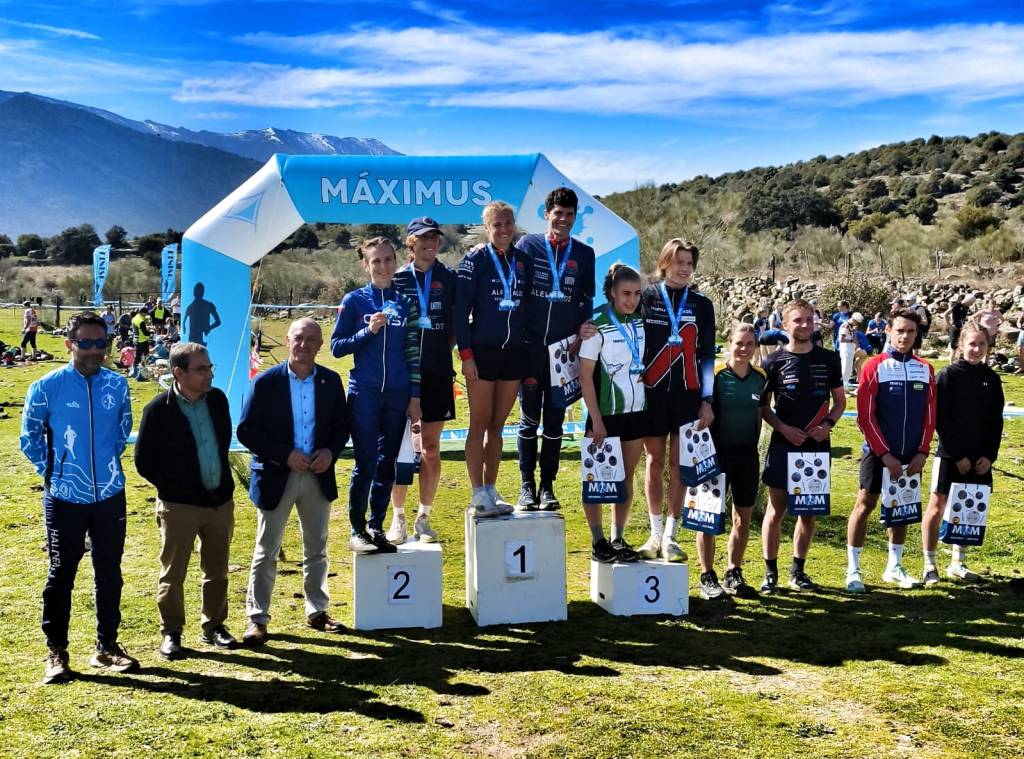
In the women’s race, Pia Young Vik showed control, intelligence, and consistency to defend her lead and secure the overall victory of Maximus O Meeting. Behind her, the fight for the podium was one of the highlights of the day. Aleksandra Hornik executed a decisive and intelligent move in the final loop to secure second place, while the young Hungarian Janka Mikes confirmed her talent with a very solid performance throughout the event, finishing third.
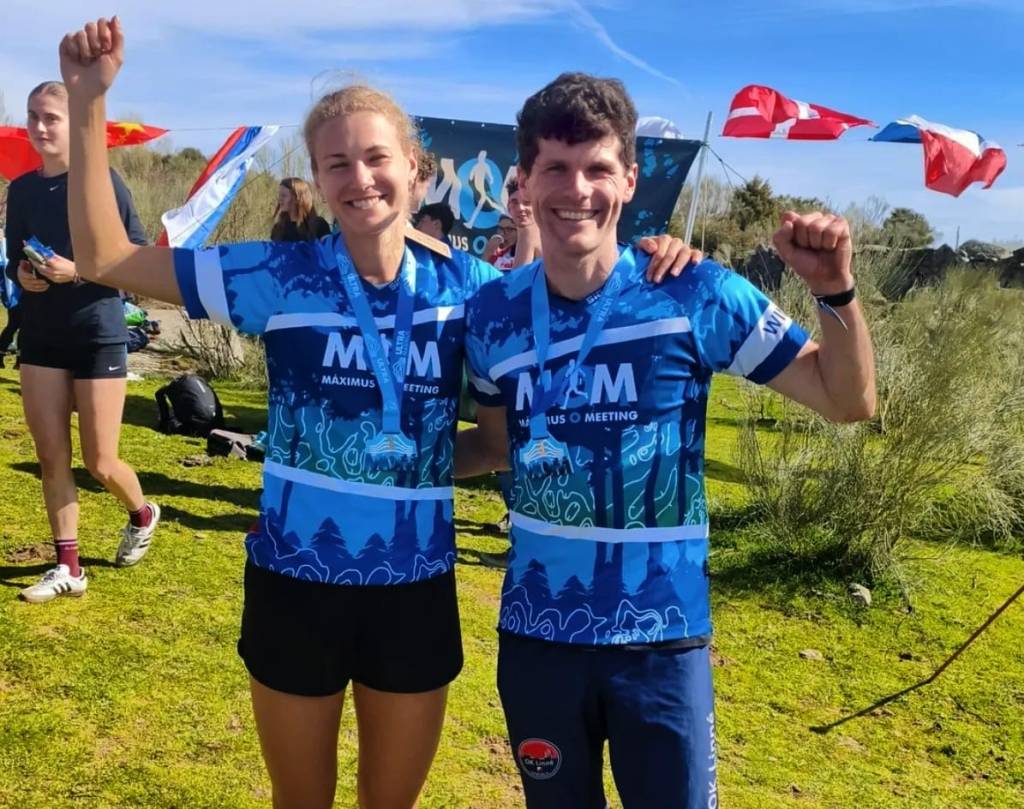
In the men’s category, the race took a dramatic turn. Oskar Hägström started the day in the lead, but a mistake at control 10 completely changed the situation. He was caught and soon after overtaken by his teammate Lucas Basset, who seized the moment and went on to claim the overall victory. A decisive moment. A decisive race. The battle for third place was also intense, with the athletes from Kalevan Rasti fighting until the end. Santeri Kirjavainen ultimately secured the final podium position.
This is the essence of a chase start. Nothing is decided until the very end.
The Team Behind the Dream
An event like this is never the result of individual work. Maximus is a team. A group of people committed to delivering excellence in every detail. From mapping and course planning to logistics, arena setup, timing, communication, and athlete experience. The level of dedication has been remarkable. A very special mention goes to that “crazy Bulgarian”, Yulian. A key figure in this project. Passionate, tireless, and absolutely essential to making Maximus what it is today.
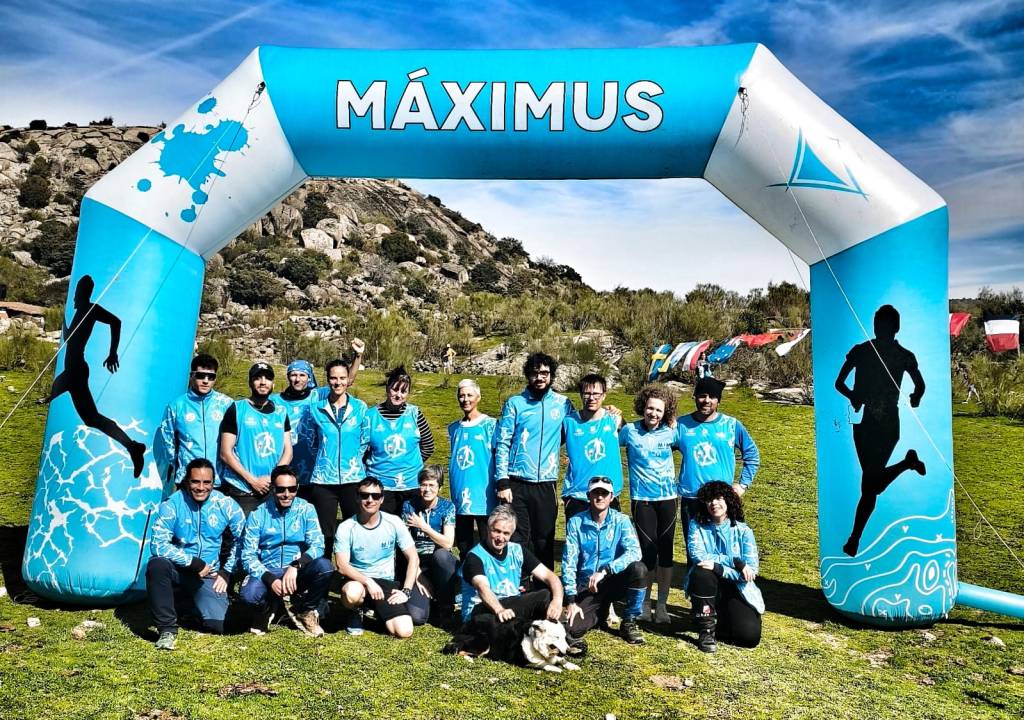
To all of you: thank you. This success belongs to the team.
Independence, Vision, and the Future
Maximus O Meeting is, and will remain, an independent event. This independence allows us to think differently. To move away from limitations, from lack of vision, and from constraints that do not help the development of our sport. It allows us to build something with a clear long-term perspective.
Our goal is simple, but ambitious: to offer the best possible experience to those who choose us.
We are not interested in being just another event. We want to be a reference. A place where athletes know they will find quality, fairness, challenge, and passion.
Maximus O Meeting is more than a competition. It is a project with identity.
What Comes Next
This edition will be remembered for its terrains, its level, its atmosphere, and its people. For the sunshine. For the smiles. And for the feeling that this is only the beginning of something bigger. And yes… there will be another chapter.
Maximus O Meeting 2027 will take place from 19 to 23 February 2027. But there is still time until then 😉 Entries open and Bulletin 1 will be published on September 1st.
The best choose Maximus. 🔥
Discover more from Orienteering Coach
Subscribe to get the latest posts sent to your email.
 Orienteering Coach
Thank you very much – most interesting We have participated before, and want to come back i 2027
All the best
Saludos Odd Eide-Fredriksen
LikeLiked by 1 person