Physical fitness is only half the battle in the complex and beautiful sport of orienteering. The real game is played in the mind. At the heart of orienteering technique lies a critical distinction that separates elite performers from the rest: proactive versus reactive map reading.

While both approaches have a role to play in modern orienteering, understanding their differences —and knowing when to use each— is a decisive factor in performance. Let’s explore these two styles, their strengths and limitations, and how to train to master both.
What is Proactive Map Reading?
Proactive map reading is the gold standard of navigation. It involves taking the time to thoroughly analyze each leg of the course before moving through it. The orienteer selects key features on the map —attack points, catching features, line features— and then looks for them in the terrain. In essence, the athlete is always one step ahead, predicting what they will see and using those expectations to maintain control.
This method is characterized by:
- Pre-selection of map features to look for
- Structured visualization of the terrain
- Anticipation of decision points
- Planning beyond the next control
Elite athletes rely heavily on proactive strategies. A 2020 study published in Scandinavian Journal of Medicine & Science in Sports showed that top-level orienteers had significantly higher eye movement patterns associated with anticipatory planning, compared to sub-elite runners (Faunø, et al., 2020).
In practical terms, this could look like:
- On a long leg across complex contour terrain, understanding the overall orography, identifying a reentrant and hill sequence as visual cues to guide you through.
- Approaching a control through a white forest, checking the compass often, aiming for a distinct boulder or hill 50 meters before the flag.
- Mentally rehearsing the next leg while running toward the current control, already visualizing which trail junction, rocky feature, or vegetation change will confirm the direction out of the control.
The result? Constant situational awareness, minimal hesitation, and higher speed with confidence.

The Power of a Plan: Don’t Run Blind
One golden rule I always emphasize with athletes I coach: “Don’t start running the leg until you have a plan.”
In the middle of a race, especially under pressure, it’s tempting to punch the control and run, thinking you’ll figure out the route choice on the fly. But unless the next leg is trivially simple, this reactive impulse often leads to poor decisions and costly errors.
Yes, sometimes you need to stop and think. And yes, it might feel like you’re wasting precious time standing still. But the reality? Those seconds spent planning are almost always worth it.
As experience builds, and with the right training, this planning process becomes faster and more intuitive. Seasoned orienteers can often analyze the next leg while approaching the current control, integrating the plan into their running flow. But even then, when the leg is complex or demands careful evaluation, it’s perfectly valid—and even smart—to stop at the control, breathe, read, and then run.
The most successful athletes aren’t the ones who run the fastest all the time. They’re the ones who know when to slow down to stay in control—and thereby avoid time losses far greater than the pause itself.
If you want to read more about this style of proactive mapreading, I recommend one of my previous articles you can find here: https://rf-coach.com/2023/03/23/the-ace-system-for-orienteering/
Reactive Map Reading: A Double-Edged Sword
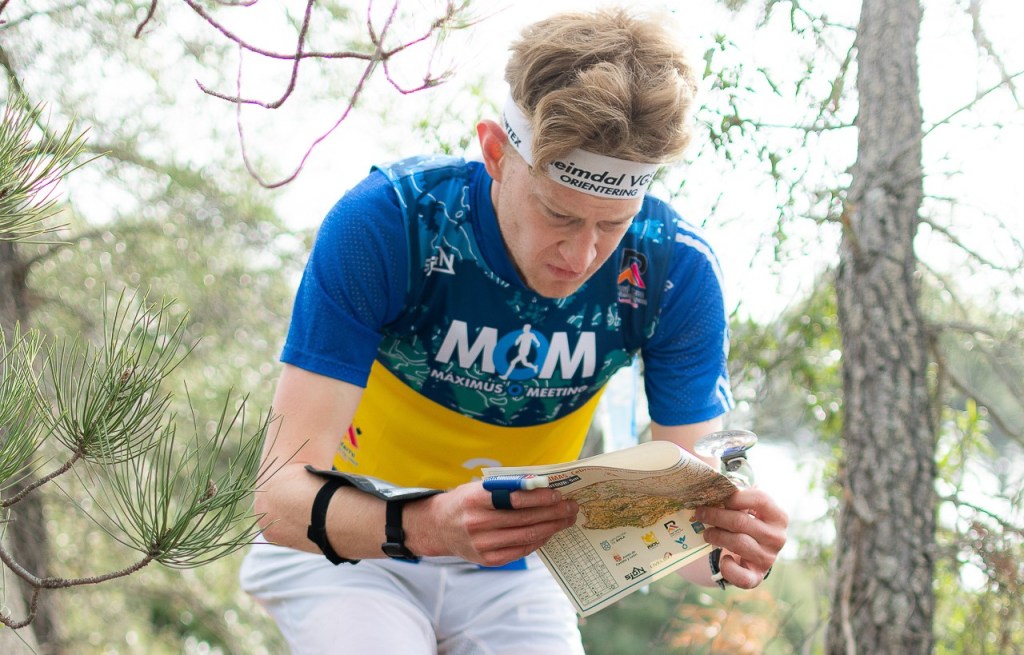
Reactive map reading, by contrast, is more spontaneous. Here, the orienteer uses the terrain as the starting point—reacting to what they see and then locating those features on the map. This style can feel faster in the short term because it reduces time spent standing still to plan. However, it often leads to decreased precision, higher risk of errors, and lower efficiency overall.
Reactive map reading often involves:
- Spotting a feature in the terrain first, then checking where it is on the map
- Making navigation decisions on the go, with minimal pre-planning
- Higher reliance on visible terrain details
This method can be useful—or even necessary—in certain situations:
- Mass start or relay events, where athletes must process quickly and adapt to dynamic conditions.
- Relocation after a mistake, where an orienteer has to anchor their position based on the first recognizable terrain clue.
- Highly visible terrain with simplified route choices, where predictive navigation offers limited advantage.
Yet, relying too much on reactive techniques can be risky. For example:
- In low-visibility terrain (dense forest, fog), reacting to what you see may offer too little information too late.
- In technically detailed terrain (micro-relief, intricate contour lines), the lack of pre-selected features increases cognitive load and the chance of parallel errors.
The Mental Mechanics of Proactivity
What makes proactive map reading so effective? It lies in the cognitive load management. Orienteering is mentally demanding: planning, executing, monitoring, and adjusting—all while running at speed.
Proactive map reading offloads cognitive effort by giving the brain a clear script: “This is what I expect to see, and when I see it, I’ll confirm my position and move on.”
By contrast, reactive reading forces the athlete to process terrain and analyze the map in real-time, which can overwhelm working memory. This often leads to:
- Pausing in the terrain to figure things out
- Frequent map checks
- Higher heart rate variability associated with cognitive stress
In one study using heart rate and GPS tracking (International Journal of Sports Science & Coaching, Haverinen et al., 2018), athletes who used proactive strategies spent 23% less time standing still and committed fewer significant navigational errors compared to reactive runners.
Training Proactive Map Reading
Just like physical training, proactive navigation is a skill developed through repetition, feedback, and conscious focus. Here are some targeted exercises used at the elite level:
- Leg Preview Drills
In training courses, stop before each leg and verbalize your plan: route choice, attack point, key features, backup plan. Run it, then review. - Map Memory Intervals
Practice visualizing a leg, then folding the map away for the next 1–2 minutes. Forces anticipatory visualization and mental picture retention. - Simplification Games
Train in detailed terrain by intentionally selecting only a few key features per leg. This helps build confidence in choosing the right details proactively. - Shadowing with Feedback
Have a coach or training partner shadow you silently, then review decisions together, focusing on whether you anticipated terrain or reacted to it.
With practice, these routines make proactive map reading more automatic and fluid. The pause before a leg becomes a matter of seconds, and often happens subconsciously as you run. But even at the highest level, never hesitate to pause when needed. Speed through clarity is always faster than speed through confusion.
Balancing the Two Styles: A Tactical Toolset
While proactive map reading should be the foundation of an elite orienteer’s navigation style, the best athletes are able to fluidly shift between both approaches when necessary.
Picture this: you make a parallel error and suddenly realize your control isn’t where expected. Panic? Not if you can switch to reactive mode: observe terrain, identify features, match them to the map, and relocate.
If you want to read more about how to react against a mistake, I recommend one of my previous articles you can find here: https://rf-coach.com/2023/03/09/hot-to-react-against-a-mistake/
Or consider a sprint relay: decisions must be made in seconds. In these scenarios, a more reactive, streamlined flow —backed by strong terrain reading skills— can make the difference.
The key is not choosing one over the other but understanding the hierarchy:
- Default to proactive for control, flow, and speed.
- Use reactive as a rescue mode or in fast-paced tactical scenarios.
Conclusion: The Mind Navigates, the Body Follows
In orienteering, map reading is not just a skill—it is your guidance system. Mastering proactive navigation gives you the power to anticipate, control, and move decisively. Reactive techniques are tools, valuable in the right moments, but dangerous if overused.
With experience and targeted training, proactive reading becomes fast, fluid, and instinctive. And when the terrain demands it, having reactive skills in your toolkit ensures you’re never lost for long.
Plan first. Run after. And when needed, don’t fear stopping. It’s often the fastest thing you can do.
References
- Faunø, P., Sander, A., & Nyberg, L. (2020). Expert-Novice Differences in Orienteering: Eye-Tracking and Map Reading Patterns. Scandinavian Journal of Medicine & Science in Sports.
- Haverinen, J., et al. (2018). The Relationship Between Navigation Strategies and Performance in Orienteering. International Journal of Sports Science & Coaching.
- Mysportscience.com – Insights into cognitive control and anticipatory decision-making in endurance sports.
Discover more from Orienteering Coach
Subscribe to get the latest posts sent to your email.
 Orienteering Coach
A supplement to the last article:
The various aspects of proactive and reactive (retrospective) map reading as well as the tactical use in certain competition situations – including psychological aspects – have already been described in detail in the textbook for coaches ‘Orientierunglauf-Training’ (Dresel/Fach/Seiler, 2009). Some practical exercises are then presented.
The book is only available in German.
LikeLiked by 1 person
Hi Uwe!
Thanks so much for your feedback. Is that book published online? I would love to read it! (Hopefully Google translate can help with that!)
Cheers, Raúl.
LikeLike
The book ist not published online, but i can send it in form of pdf-documents to you. Than i need your e-mail address. Regards Uwe
LikeLiked by 1 person
That would be fantastic! Thanks so much! You can use the email: info@rf-coach.com 🙏
LikeLike