
As the Orienteering World Cup kicks off this week in Idre Fjäll (June 18–22, 2025), athletes will be tested not just physically, but technically—perhaps more than anywhere else this season. One of the most demanding skills in this type of terrain is the art of attacking controls on sloping ground, especially on diagonal downhill approaches. If you’ve ever felt your compass betray you while sliding sideways down a hill at speed, you’re not alone. But those who handle it well? They win.
🏔 Why Slope Controls Matter in Idre
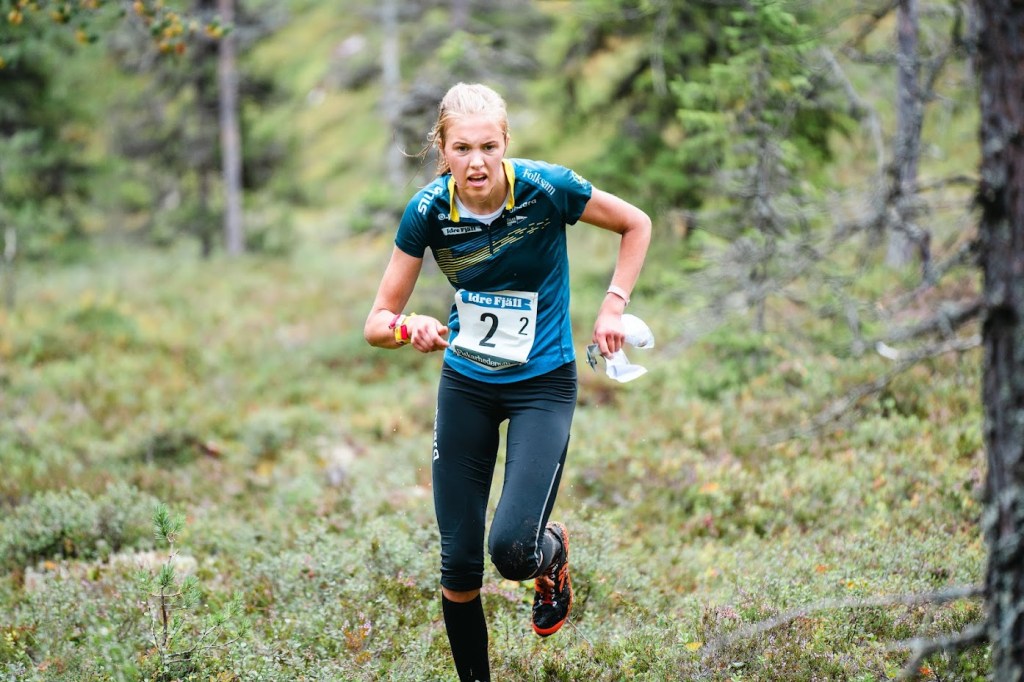
Idre Fjäll’s forest is fast, open, and breathtaking—literally and technically. Sitting at 700–900 m above sea level, the terrain features moderate to steep slopes, rocky sections, and subtle contour features that can either guide or confuse. Visibility is usually excellent, which encourages fast running—but don’t be fooled. This is exactly when precision becomes more valuable than speed.
What makes slope controls especially tricky is that your body, momentum, and perception are constantly being pulled downhill, even when your compass says otherwise. Diagonal downhill approaches are the worst offenders: it’s easy to lose height too early, drift off line, or miss subtle features entirely. And once you’re off by 20–30 meters, regaining control can cost precious time.
🏅 Precision Over Speed: The Golden Rule
Attacking slope controls successfully is not about slowing down for safety—it’s about being precise from start to finish. That might involve adjusting your speed, but the main focus should be on maintaining map contact, compass alignment, and terrain interpretation at every moment.
Yes, even world-class runners occasionally lose a few seconds inside the control circle on slope controls. But those who keep that error margin small—and recover instantly—have a huge advantage.
So don’t think “slow down.” Think: “Be 100% sure.”
🔍 How to Read the Map with Slope in Mind
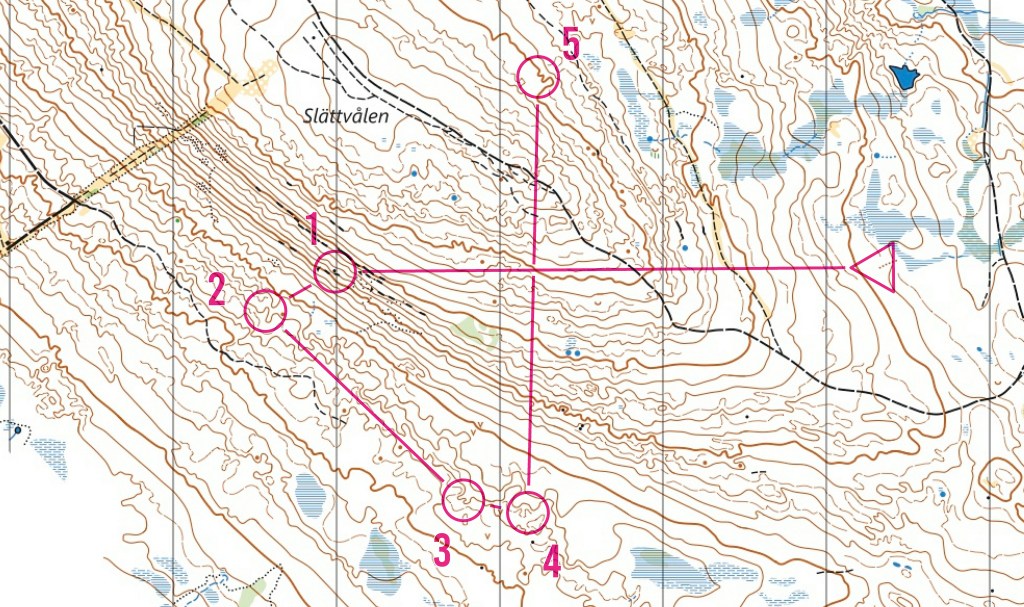
Your best defense is great planning. When studying a slope leg:
- Trace the contours carefully. Is the slope symmetrical or does it steepen partway? Where could it throw you off line?
- Identify strong intermediate features. Instead of aiming straight at the control, break the leg into clear visual checkpoints: a boulder, a knoll, a re-entrant shoulder.
- Use the terrain to confirm direction. Even on fast legs, the terrain gives constant feedback—if you’re reading it.
- Rise your eyes. Visibility in Idre is often good to very good—use it to spot the objects from far and make your navigation proactive and smooth.
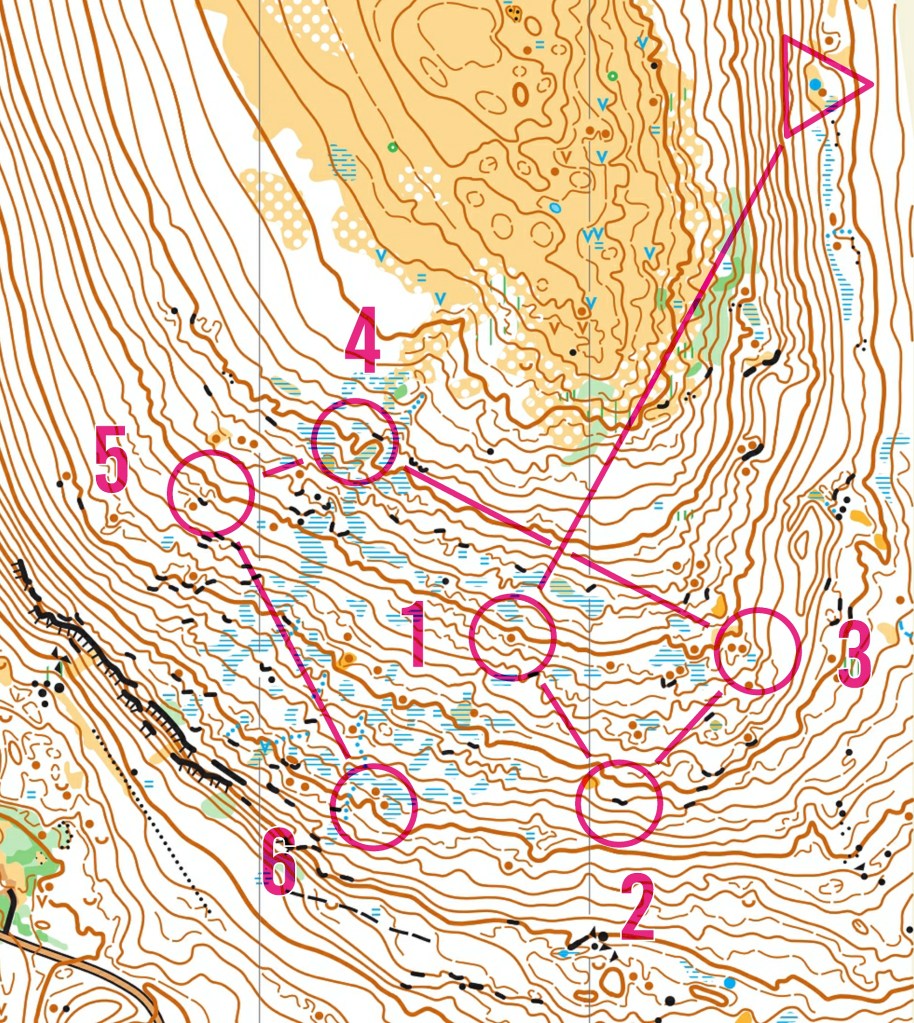
And remember: on downhill slopes, your angle of attack matters. If you’re coming in from above, it’s easier to spot features and stop at the right moment. If you’re approaching from below or diagonally, prepare for a harder visual task and prioritize compass control.
🧠 Final Thoughts
Slope controls combine everything that makes orienteering beautiful: map interpretation, compass mastery, terrain reading, and execution under fatigue. In Idre Fjäll, they won’t just be part of the challenge—they are the challenge.
Embrace them.
Plan every leg with awareness of the slope. Trust your compass like it’s part of your body. And when you hit that control—on a steep, rocky hillside at high speed —you’ll know you’ve done it right.
Because slope control mastery isn’t about being lucky. It’s about being ready.
Discover more from RF-COACH
Subscribe to get the latest posts sent to your email.
 RF-COACH
One thought on “🎯 Mastering Slope Controls: Lessons from Idre Fjäll”